Rained out at noon. Four hours on the clock. Was it a bad day?
Every contractor knows that morning. The sky turns, the crew covers what they can, and everybody heads home early.
What the time card says
On a time card, you can't tell. Short day, short pay, move on.
The time card only knows how long the crew was there. It doesn't know what they did with the time. So a half day looks like half a loss, and nobody thinks about it again.
That's a shame, because some of those short mornings are the best work a crew does all week. They knew the weather was coming. They pushed. They got the critical section done before the rain.
What production says
Measured by production, you can tell.
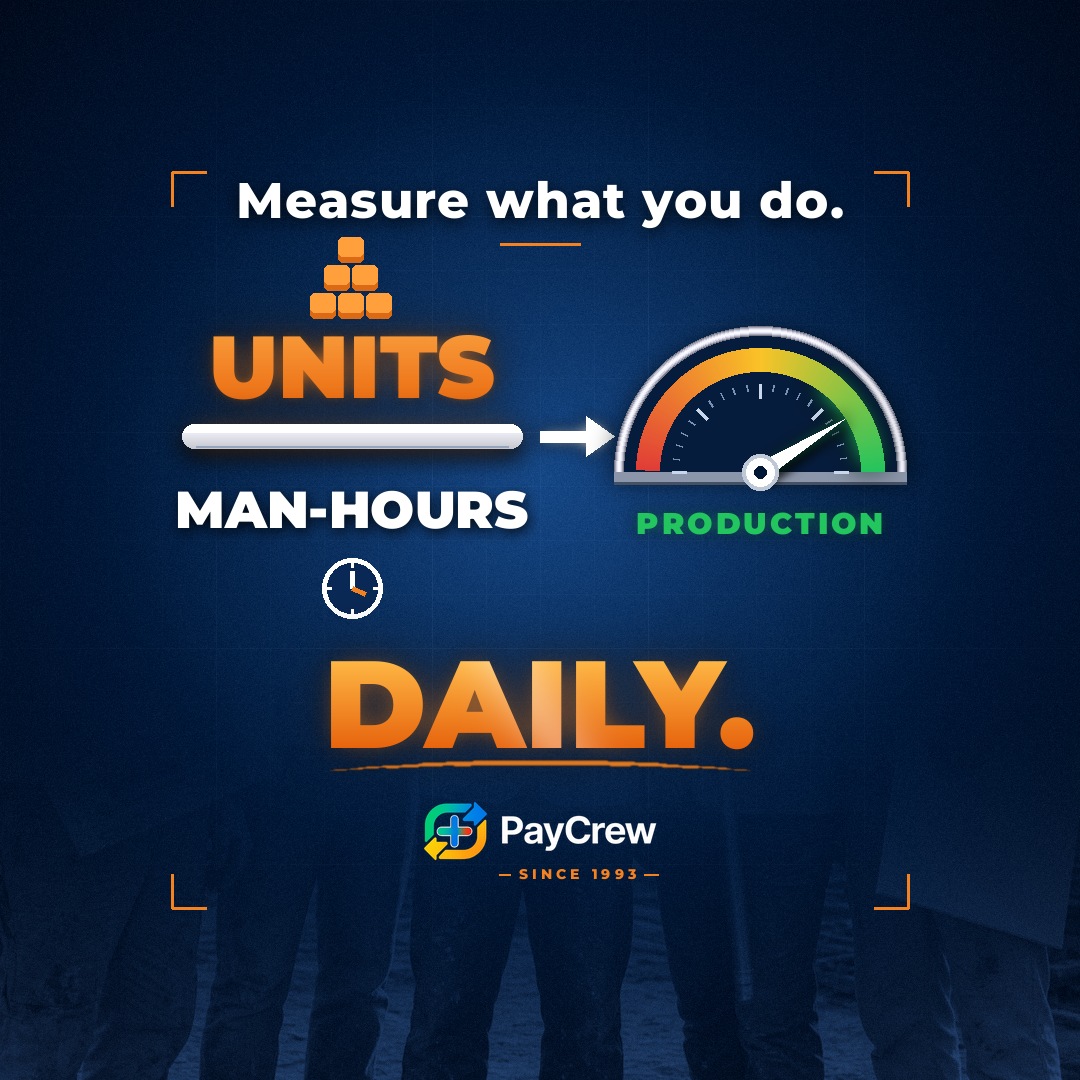
Production is units divided by man-hours. It doesn't care how long the day was. It cares what got done in the hours you had.
Example: a crew of five works four hours. That's 20 man-hours. They place 70 units. 70 divided by 20 is 3.50 units per man-hour.
If the goal was 3.25, they won the morning.
Why that matters
A crew that won the morning should know it. If all they hear is that it was a short day, they learn that effort on a short day doesn't count. Next time the weather turns, why push?
If they see the score, they learn the opposite. Every hour counts, even the last one before the rain. That's the behavior you want on every job.
They should hear it on site
That crew should hear it before they leave the site, not at the end of the job.
PayCrew shows the score as soon as the crew enters their time and quantities. It combines posted payroll with unposted time as people enter it, so the morning's result is there before they pack up. Read more in know the score before you leave.
Short days in the record
Short days matter for the history too.
If you only track hours, a short day just drags down the job's totals and looks like noise. If you track units per man-hour, the short day becomes a clean data point. Four hours of real production at a real rate. Your next estimate is better for it.
You can also tag the day with an attribute for the weather. Then you can see how your crews really perform when the weather is against them, without adding a cost code. See cost codes and attributes.
Long days, too
The same idea works the other way. A ten-hour day isn't a good day just because it was long. If the crew placed the same units they'd normally place in eight, the extra two hours were cost, not production.
The rate tells you the truth either way.
Tell the crew
If your crew won a short morning, tell them. It costs nothing, and it teaches the whole crew that the score counts every hour, not just on the long days.
Fair to the crew, fair to the company
Measuring by rate is fairer to everyone. The crew gets credit for what they did in the time they had. The company gets an honest picture of the day, not a half day that looks like a loss. Nobody has to argue about it, because the number shows it.
You only know if you measure it
A short day can still be a good day. You only know if you measure it.
See how daily production by cost code works on every day, long or short.