Two slab pours. Same cost code. One on a pump, one off the chute. Should they have the same goal?
No. And if your history mixes them together, your average is wrong for both.
That's the cost code problem every contractor runs into sooner or later.
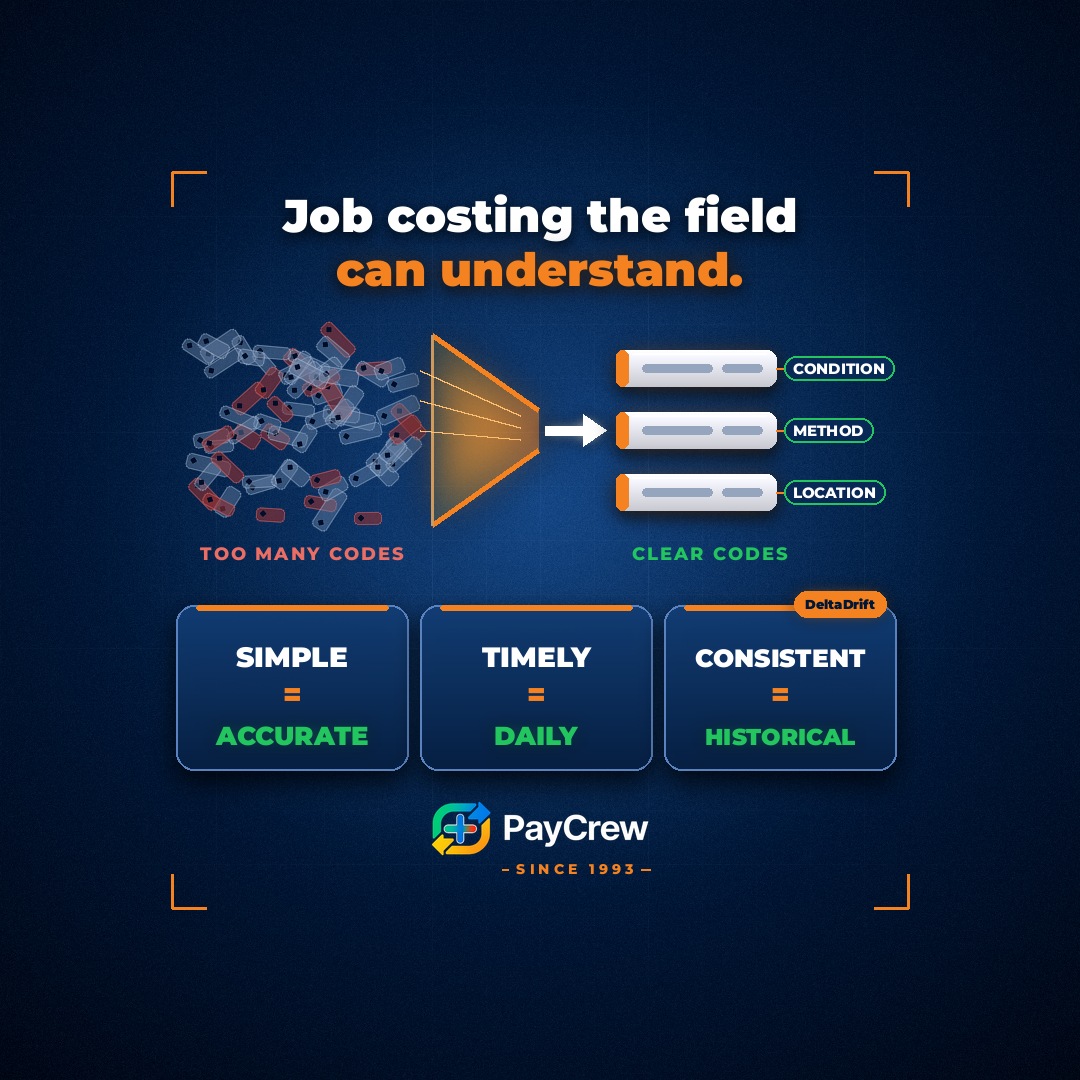
Too many codes is worthless data
The old answer was more cost codes. One code for pump pours, one for chute pours, one for each floor, each condition, each method.
It looks precise in the office. But crews guess at the code just to get their time in. Nobody on the slab at 4:30 wants to pick from a list of sixty codes. They pick the one they used yesterday. The data gets worse, not better.
Too few is worthless too
The other extreme is one or two codes per job. Easy to enter. Nobody gets it wrong.
But it tells you nothing about where the hours went. When the job runs over, you can't tell whether it was forming, placing or finishing. You can't build a rate for the next bid. You just know the total.
The magic is what the field can digest
The right number of codes is the one your foreman can explain to the crew in the morning, and they can get right at the end of the day.
That's usually fewer than the office wants and more than the field would pick on its own. Each code should have clearly defined tasks and a unit of measure the crew already knows. Forming by the linear foot. Placing by the yard. Finishing by the square foot.
As your people get comfortable, you can refine the list. Start where the crew can be accurate.
Attributes capture the difference
So how do you capture the details without hundreds of cost codes? Attributes.
PayCrew lets crews tag their work with simple attributes that identify what made it different: the method, the conditions or the location. Pump or chute. Cold weather or normal. Tight site or open.
The cost code list stays short and easy to get right. The production data gets normalized, so you compare similar work under comparable conditions.
Now the pump pour and the chute pour each have their own history. Each one gets its own fair goal.
Fair goals are the only kind a crew will chase
That's how a goal stays fair. A fair goal is the only kind a crew will chase.
If the crew on the chute pour gets judged against pump rates, they'll lose every time, and they'll stop believing the number. Once a crew stops believing the goal, measuring stops working.
Three goals that make it work
- Simple = Accurate. Codes the crew understands get entered correctly.
- Timely = Daily. Time and units go in every day, not rebuilt at the end of the week.
- Consistent = Historical. The same codes, job after job, build a history you can trust and estimate from.
How to get started
If your cost code list has grown out of control, don't rebuild it all at once. Pick the codes your crews use most. Make sure each one has clear tasks and a unit. Then add one or two attributes for the differences that matter most, like method or conditions.
Where the history pays off
That history is where our DeltaDrift add-on comes in. It checks every labor estimate against what the field really produces, so your next bid starts from real numbers. It's also how you keep the rates when your estimator retires.
We don't just set it up and leave. We teach these goals and measure them every day until they're fully implemented. See how it fits together in daily production by cost code.