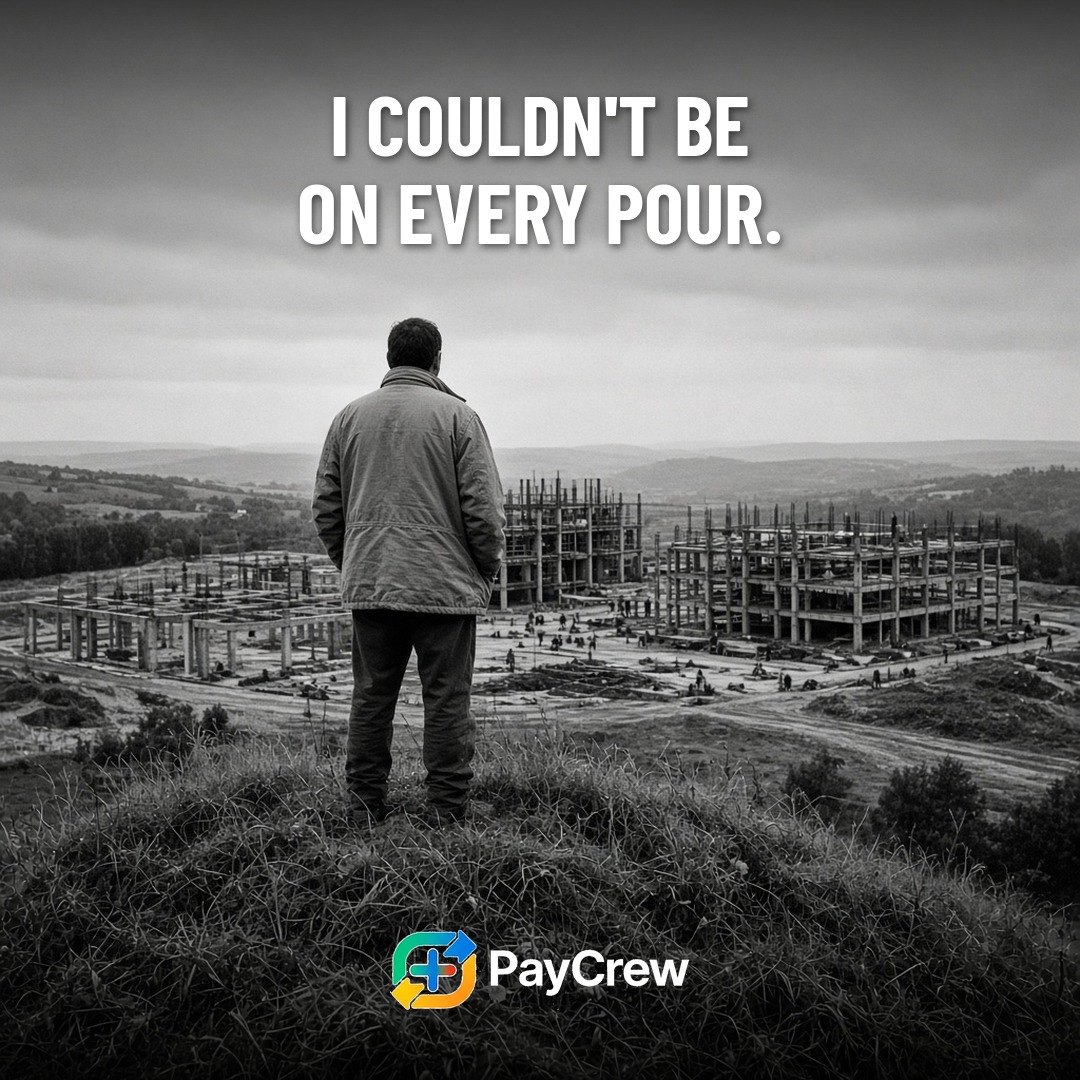
I owned a concrete company with more than 250 people. I couldn't be on every pour.
Nobody can. Once you grow past a few crews, you're running the company from reports. And the reports came in too late to change anything.
The owner's problem
In the early years, I was on the slab. I knew which crews were fast, which foremen planned ahead, which jobs were in trouble. I could see it.
Then we grew. More crews, more jobs, more sites across town on the same morning. I could visit a few. The rest I saw on paper, weeks later, when the job cost report finally ran.
That's the trap a lot of owners fall into. You built the company by being there. Now the company is too big for you to be there, and the old way stops working.
The wrong fix
The obvious fix is more supervision. More superintendents. More site visits. More calls to the foreman asking how it's going.
That adds cost and it doesn't scale. It also sends the wrong message. It tells the crew they can't be trusted without someone watching. Good foremen don't want to work that way, and they shouldn't have to.
The fix we built in 1993
That's the problem my co-founder and I were trying to solve in 1993, when we built the first PayCrew for our own company.
We didn't want more supervision. We wanted a way for every crew to know the goal and see the score, whether I was on that site or not.
So we started measuring production every day. Units placed, finished or formed, divided by the man-hours it took. Every crew got a daily goal in units they understood. Every crew saw at the end of the day whether they hit it.
The crews didn't need me
It turned out the crews didn't need me standing there. They needed the number.
When a crew knows the goal, they plan for it. They size the crew, stage the material and set up the next morning without being told. When they see the score, they know where they stand. When they win, they know it, and they're proud of it.
And I could see every crew's score the same day, from anywhere. Not to catch anyone. To know where to send help, and where to say thank you.
What it gave the company
Measuring every day gave us more than visibility:
- Foremen who ran their crews like owners
- Estimates built from what crews really produced
- Problems found the same day instead of at closeout
- A company that could grow without the owner being the bottleneck
It also changed my job. I stopped chasing problems and started fixing the systems that caused them.
What I tell owners now
When an owner tells me they can't be everywhere, I tell them they don't need to be. They need every crew to know the goal, see the score and have a reason to win. Then the owner's job changes from watching to helping.
That's a better job, and it's a better company to work for. The crews feel trusted, the foremen grow and the owner finally has time to work on the business instead of in it.
If you're stretched too thin
I think about that every time an owner tells me they're stretched too thin.
The answer usually isn't another supervisor. It's giving every crew the number. Read how that works with daily production by cost code, and why it works best built on trust instead of tracking.
If you're running more crews than you can visit, let's talk.