How many man-hours does it take your crew to pour and finish a 10 cubic yard load of concrete?
Here's the catch. Ask five foremen and you'll get five answers. Ask the office and you'll get a sixth.
If you're not measuring, you're guessing
If you're not measuring it, you're guessing. And you're bidding the next job on that guess.
That's not a knock on foremen. Each one is remembering a different job, a different crew and different conditions. Memory averages the good days and the bad days in ways nobody can check.
Every trade has the same question
It's the same question for every trade.
How many hours to hang a pallet of drywall? To spray ten 5-gallon buckets of paint with an airless rig? To lay 5 cubes of masonry block? To frame 2 bunks of 2x4 stud walls?
If you don't know, you can't manage it.
Every trade has a unit
Whatever your trade, the work can be measured.
Concrete has cubic yards placed. Framing has linear feet. Drywall has boards hung. Electrical has devices set. Pipe has feet run. Every trade has a unit.
Hours alone don't tell you enough
Hours alone tell you what a job cost. Units per man-hour tell you whether the crew got the work done.
A crew that worked 40 hours tells you nothing by itself. A crew that placed 180 units in 40 man-hours, 4.50 per man-hour, tells you exactly how the day went. Compare that to the goal and you know if they won.
One simple number
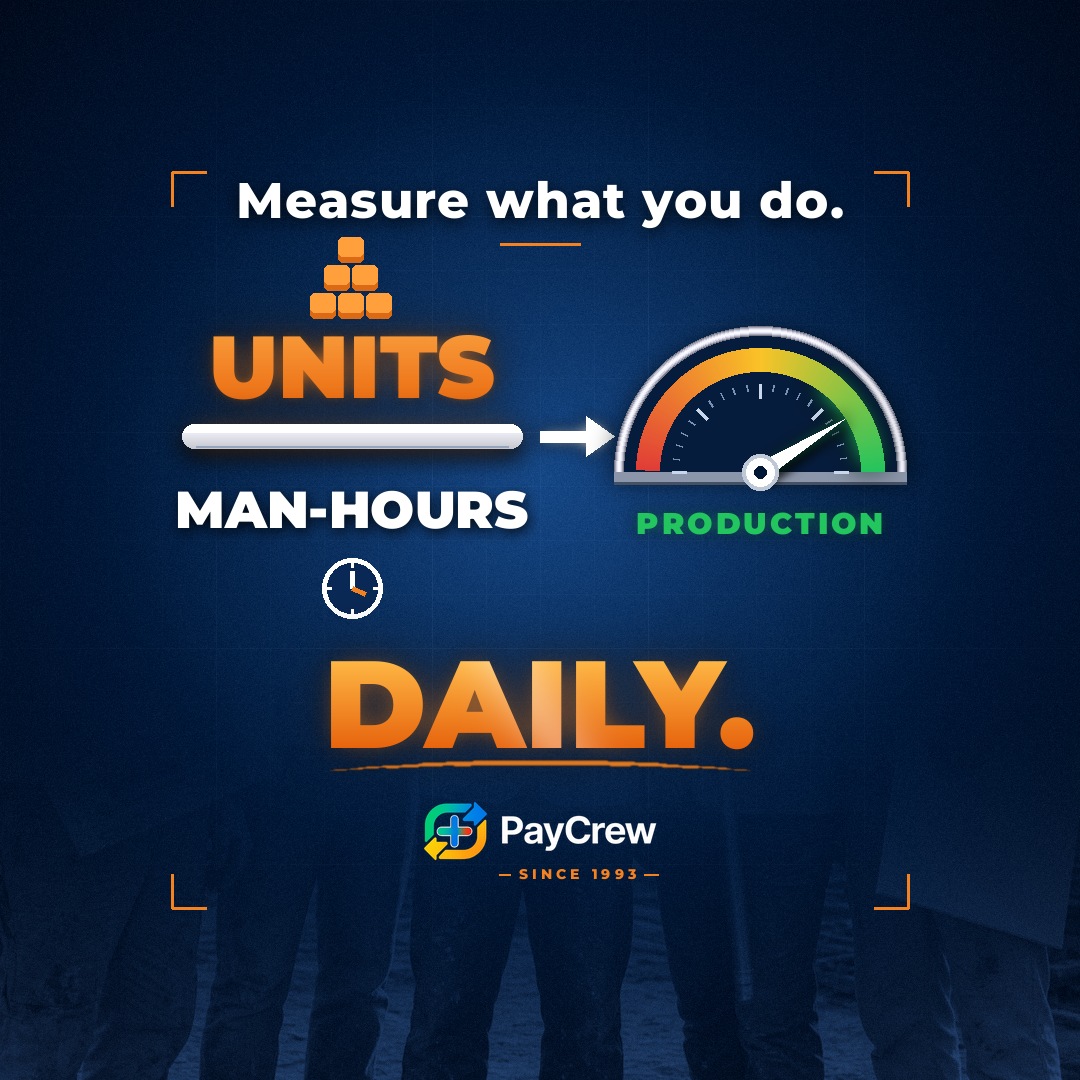
Units divided by man-hours. That's the whole idea, and it's been our focus for 33 years, since 1993.
When crews log their quantities against the hours it took, everyone sees the day's production in one simple number.
- The foreman knows where the crew stands before the shift ends.
- The estimator sees whether the bid holds up.
- The project manager sees a cost code drifting while there's time to fix it.
- The owner sees what each job really earns.
Let the real number show up
Track the units installed and the hours it took, every day, and the real number shows up job after job.
Once you know it, you can set goals the crew understands, see right away when work runs long and price your next bid on what your field really does. Our DeltaDrift add-on checks every labor estimate against those actual numbers.
How PayCrew uses it
That's why PayCrew has always been built around units and man-hours, not just time cards:
- Crews enter time and quantities daily, on the right job and cost code
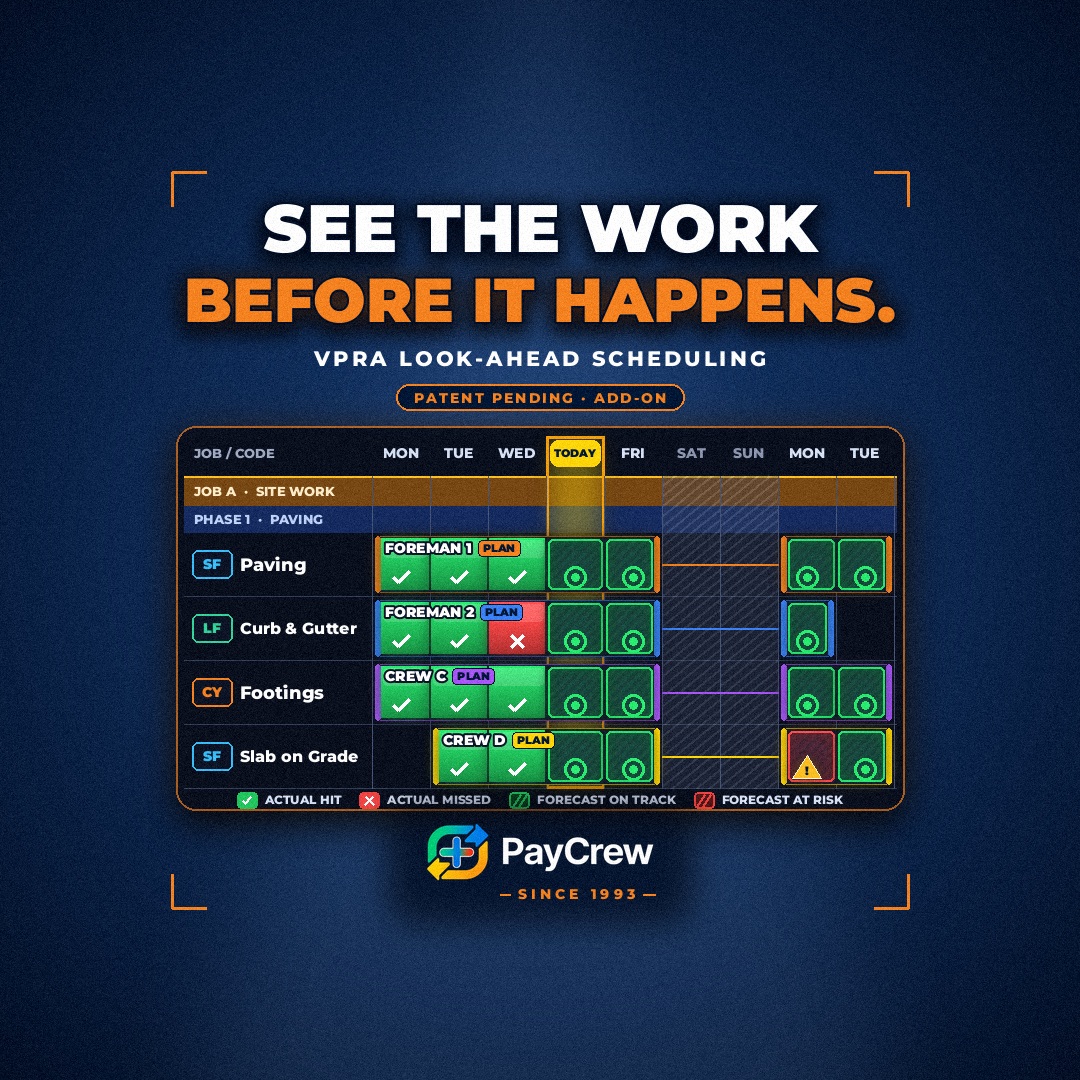
- Production rates show up the same day, green when the crew is on goal and red when it's behind
- Estimates get checked against what the field actually produces
- The labor savings can be measured and shared with the people who earned them
Technology has changed a lot since 1993. This simple idea hasn't, because it works.
Start with one cost code
You don't need to measure everything on day one. Pick one cost code your crews do every week. Track the units and man-hours every day for a month. You'll learn more about your real rate in that month than in years of guessing.
Measure what you do
No matter what trade you are, you can measure what you do. Daily.
So what's your number for that 10-yard load? If you're not sure, start measuring. See daily production by cost code and how crews know the score before they leave.