I ran a concrete company for years. Winning more work never made us more money. Three things did, and every one of them can be measured.
The first one starts in the field, before the first pour. If the estimate is wrong, or the crew never sees it, or you don't measure the day until the job is over, you are guessing. A daily readout in units per man-hour is what stops that guess. The other two points, the work in progress statement and the return on what you spend in the office, both depend on it.
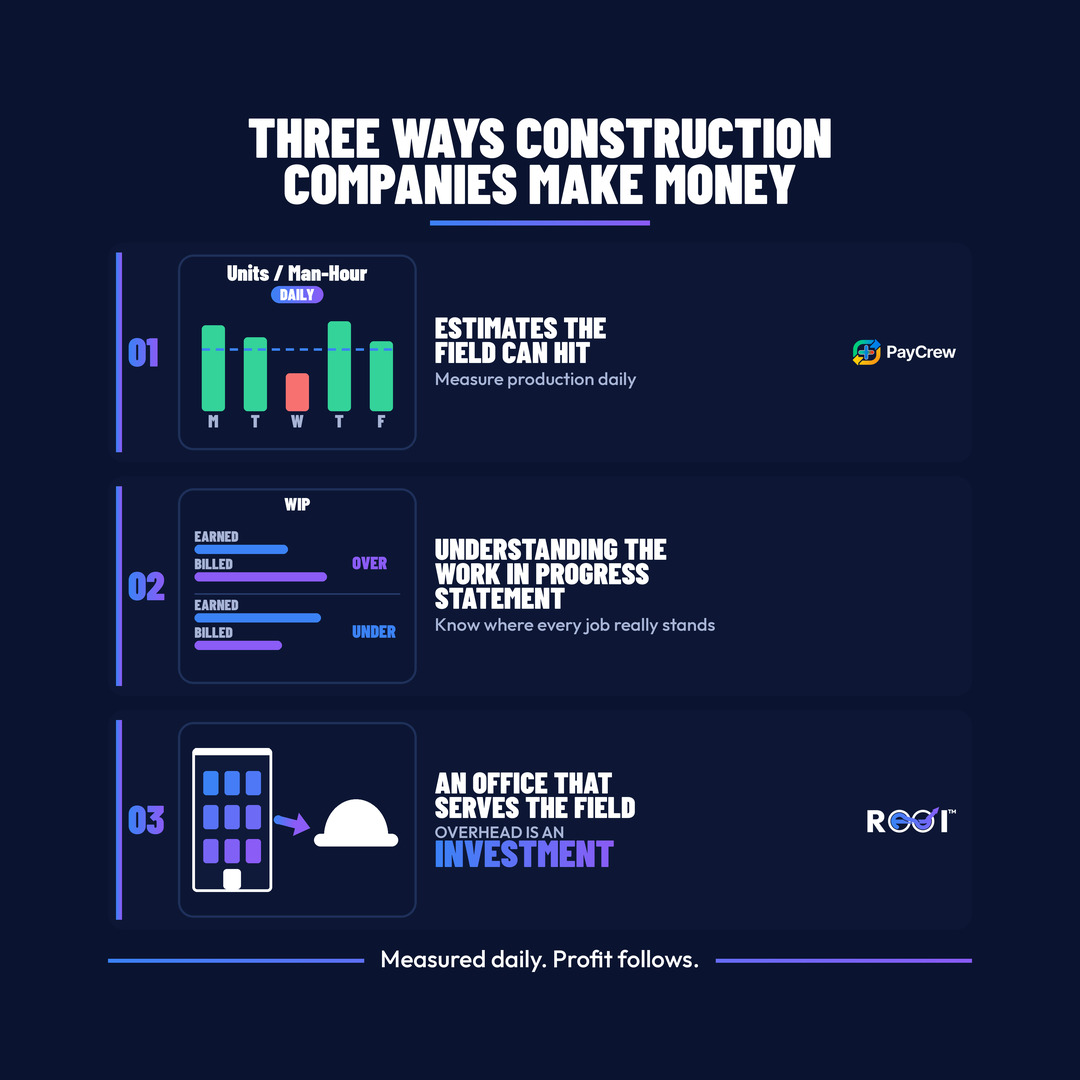
01. Estimates the field can hit
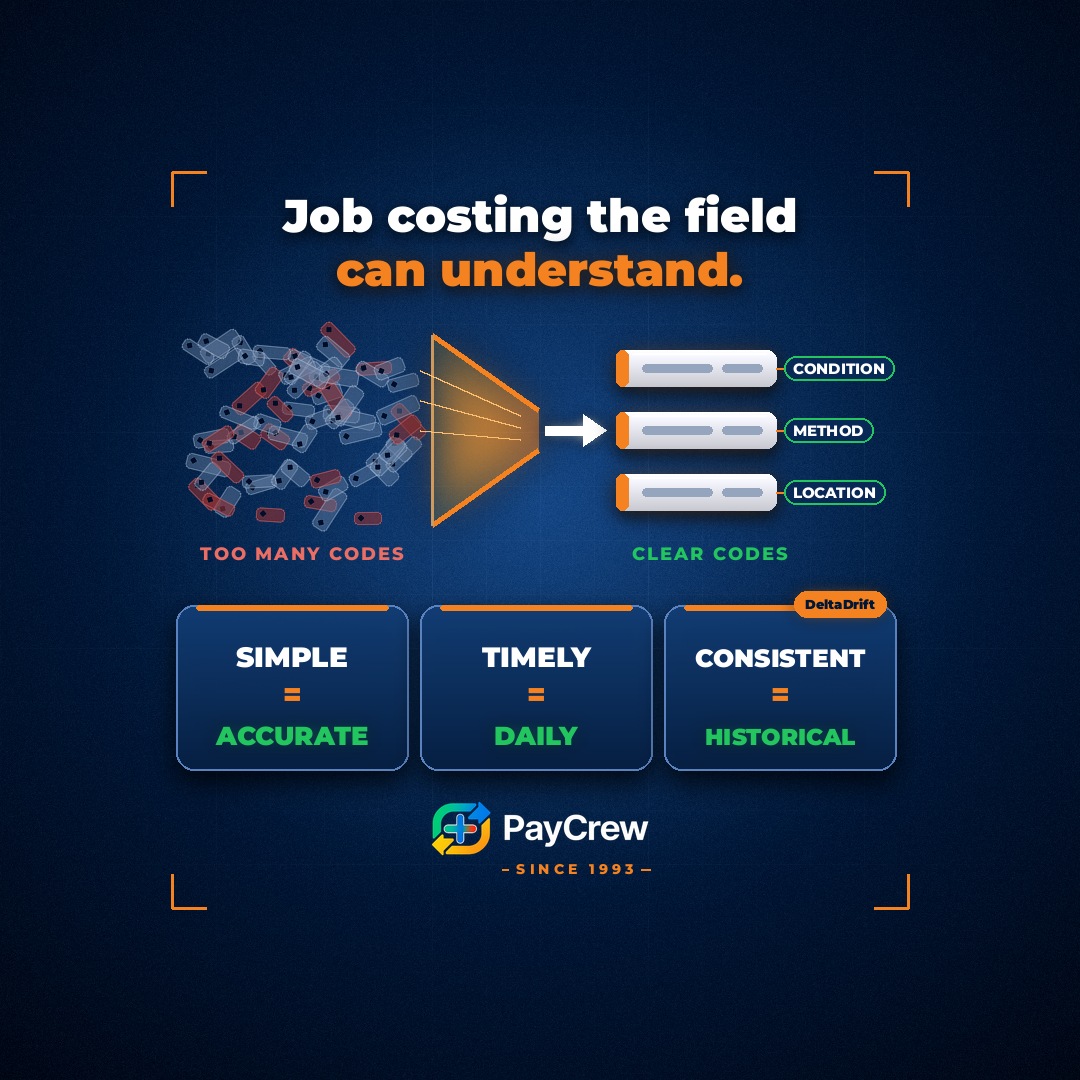
The estimate sets the hours by cost code. That is the starting point. Not a lump of hours for the whole job. Hours tied to the work the crew actually does, in units they understand.
The crew sees that target before the first pour. A goal nobody can see is not a goal. When the crew knows the units and the hours, they can plan the day around them. They know how many people the work needs. They know at noon whether they are ahead or behind.
Then we track units per man-hour every day. That is the score. Units completed, divided by the hours it took, against the estimate for that cost code.
Green means we hit it. Red means we didn't, and we find out why while the job is still running. A red day is a conversation with the foreman that night, not a write-down at closeout. Maybe the material was late. Maybe the crew was the wrong size. Maybe the estimate was never real. You only learn that if you look at the number the same day.
That daily feedback is what makes the next bid more accurate. Every green day and every red day goes back into history. The next estimate starts from what the crews actually produce, not from a rate someone hoped would win the work. You stop bidding hours the field cannot meet, and you stop leaving money on the table on work you can beat.
Without a daily readout, the field only manages the clock. Forty hours, and as much overtime as they can get. That is not a character flaw. That is the scoreboard you gave them. Change the score to units per man-hour, show it in red and green, and the crew has a reason to manage the work.
02. Understanding the work in progress statement
The WIP shows earned revenue against what you've billed and what it will cost to finish. Earned is the value of the work in place. Billed is what you have already invoiced. Cost to finish is what it will take to get to the end.
It tells you if you're over billed or under billed, and which jobs are really making money. Over billed means you have invoiced more than you have earned. That can look like cash in the door and still leave a hole later. Under billed means you have earned more than you have invoiced, and you may be financing the job with your own money. Either way, you cannot manage what you cannot see.
But it's only as good as the field numbers behind it. Earned revenue and cost to complete both come from production and cost that have to be current. If the quantities are a week late, or the hours landed on the wrong cost code, the earned number is off, and the cost to finish is off with it.
Late or wrong production data turns your WIP into a guess. I have sat in meetings where the WIP said a job was fine, and the field already knew it was not. The statement was not lying. It was outdated. Daily units per man-hour, on the right cost code, is what keeps the WIP honest. That is the same red and green readout from the first point, doing a second job in the office.
03. An office that serves the field
The estimator, project manager, office staff and owner all have one job, which is getting the crew what it needs to win. That is easy to forget. When we talk about production, we picture the people on the slab. A lot of what makes that crew win happens in seats that never get dirty. Material ordered right. Time approved the same day. A bid built on real rates. A change order backed by daily quantities.
Overhead isn't just a cost to cut. It's an investment, and it should pay back a return you can measure. Every salary in the office, every lease, every piece of software is money you put in before a job pays. You spend it whether the year is good or bad. Any other investment gets asked what it returned. Overhead should get the same question.
That's ROOI, Return on Overhead Investment. Pretax profit divided by overhead. If you cannot measure the return, you cannot tell whether the office is helping the field or just adding cost. When the office can see the same daily score the crew sees, the investment has a purpose: get the crew what it needs, and share in the result.
Which of these three is costing your company the most right now?