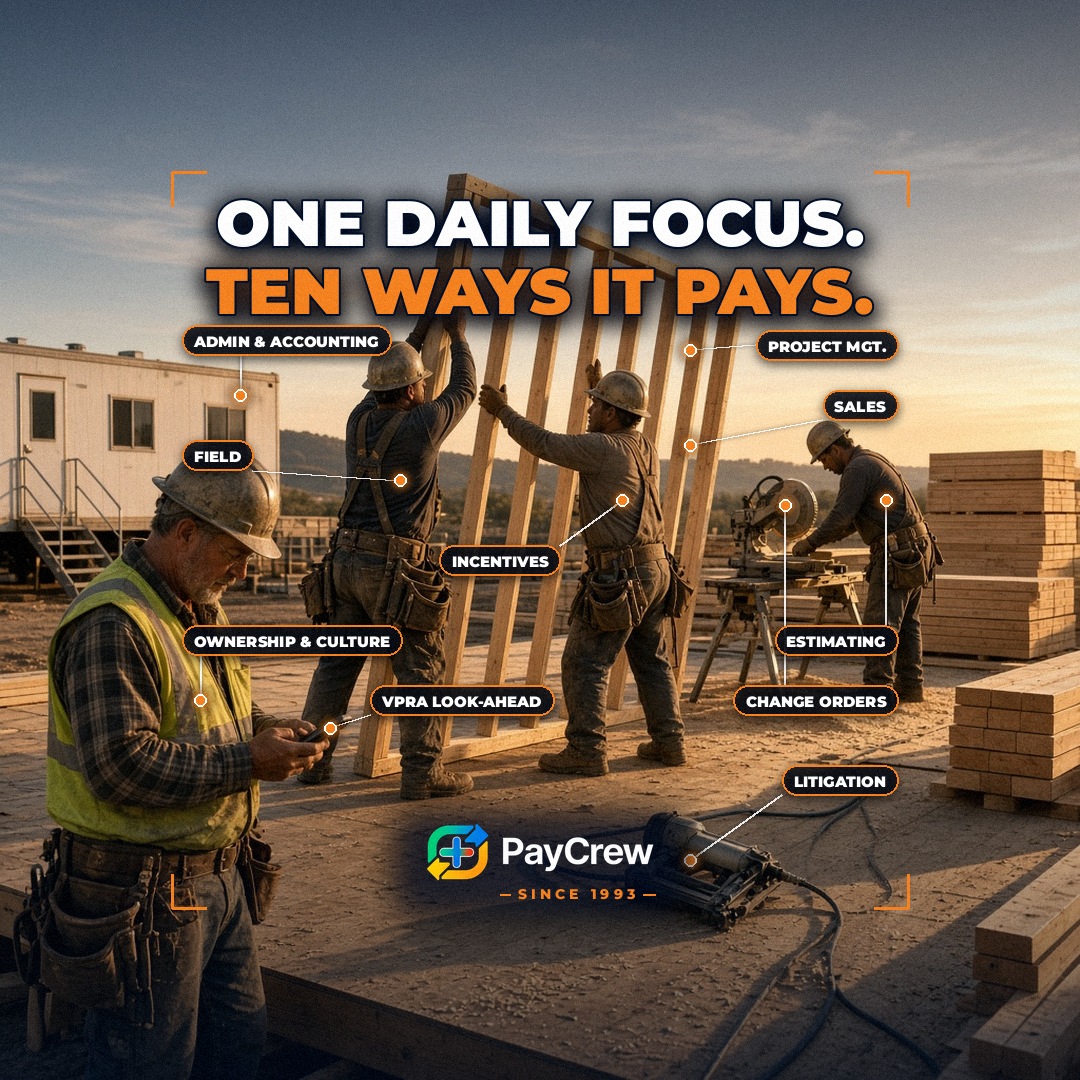
Most time-collection software stops at the time card. It collects the hours, sends them to payroll and calls it done.
Ours starts there.
What 30 years taught us
We've been measuring production on real jobsites for 30+ years. That experience taught us one thing: software pays off only when the process behind it is fully in place.
I've seen companies buy good software and get nothing from it. The crews entered time the same sloppy way they always had, just on a phone. The reports looked nicer. Nothing changed on the jobsite.
The time card is just the raw material. What you do with it is where the value is.
We don't just install it
So we don't just install it. We teach it, and we measure every key process daily ourselves, so your implementation succeeds.
That means working with your estimators on cost codes and units. Training foremen on daily approvals. Showing crews what the score means. Then measuring how each of those is going, every day, until it sticks.
Most software companies hand you a login and a help page. We stay until it works.
What happens after the time card
Here's what PayCrew does with the time once it's in:
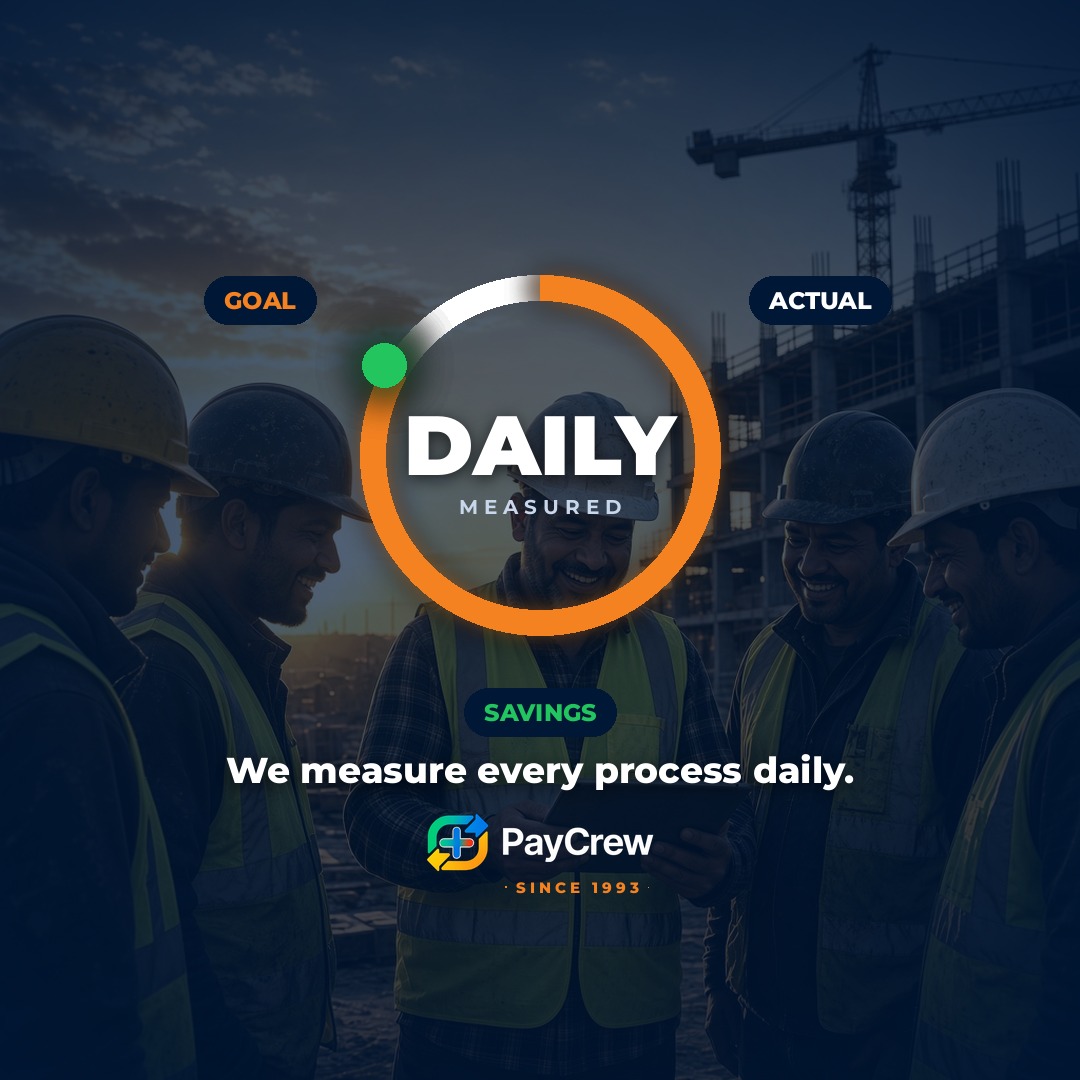
- Set daily production goals for every crew, by job and cost code
- Show each crew its score every day, so they know right away whether they're ahead of goal or behind it
- Measure your return every day in MarginManifest in the PayCrew V3 Hub
- Share the labor savings with everyone in the company through ProfitPace
Each step builds on the one before. Goals make the score mean something. The score gives the crew a reason to enter time right. Measured savings fund the incentives. The incentives keep everyone focused.
Why the whole company shares
When the whole company shares in the results, everyone has a reason to hit the goal every day.
That's the part a time card can't do. A time card asks people to report. A shared goal asks people to win. The first one gets you hours. The second gets you production.
Read why every seat helps win the day.
Built the way you work
PayCrew V3 is built the way you work and can be fully customized to fit your workflows.
Your cost codes, your units, your approval steps, your accounting system. We fit the process to your company, not the other way around. If you use Foundation, approved time can go there the same day with Foundation time sync.
Teaching is the product
People sometimes ask me what they're really buying. The honest answer is the teaching. The software makes it possible to measure every day. The teaching makes people want to.
That's why we measure the key processes ourselves during your rollout. Daily entry. Daily approval. Goals set. Scores seen. When one of those slips, we see it and help fix it before it becomes a habit.
We also stay in touch after the rollout. Habits drift. New foremen come in. A quick check on the daily numbers shows when something is slipping, so it gets fixed early.
That's the difference between buying a tool and building a habit.
Where to start
If you already have time software, ask yourself what happens after the time card. Do your crews see anything? Does it change what they do tomorrow? Does it make your next estimate better?
If the answer is no, the software stopped at the time card. Let's talk about what comes next. Start with daily production by cost code.