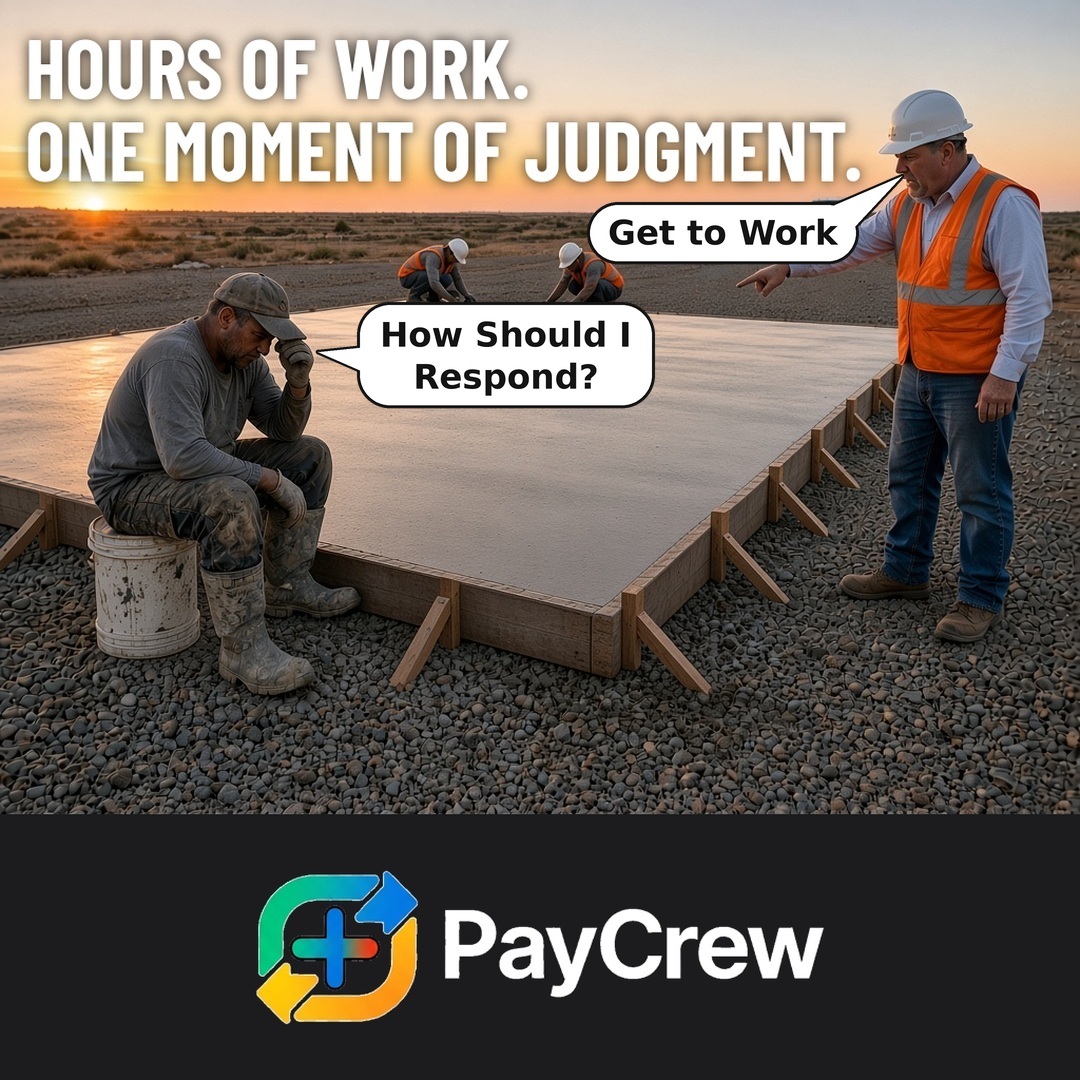
Every owner I know says yes. I said yes too, back when I ran my concrete company.
Then you look at how the company actually runs. The rules, the tools, the way the office talks about the field. That tells you the real answer, and your crew reads it every day.
The question behind the question
Trust isn't a feeling. It's a set of choices. Every time you pick a tool or write a rule, you send the crew a message about what you think of them.
Most of those messages aren't sent on purpose. Somebody had a bad week with one employee, and a rule went in for everyone. A vendor sold a tracking feature, and it got turned on because it was there. Years later, the whole crew is living under rules built for one person.
Twelve habits that say "we're watching you"
Here's the list I put in front of owners. Count how many your company does.
- Geofencing to track where crews are
- Facial recognition to clock in
- Fingerprint scanning to clock in
- GPS tracking on trucks to see where the crew stops
- Cameras pointed at the crew instead of the work
- The foreman calls in every time he leaves the site
- Rounding timecards down or docking minutes for being late
- Locking up every tool and making guys sign them out
- Never showing the crew the budget or estimated hours
- Second-guessing the foreman in front of his crew
- Phone apps that track workers after hours
- Surprise visits meant to catch someone slacking
None of these build trust. They tell your best people you're watching them. And your best people are the ones with options.
What watching costs you
Surveillance measures where a man is. It doesn't measure what he built.
A crew can sit inside a geofence all day and place nothing. Another crew can leave the site for material, come back and beat the goal. The tracking can't tell them apart. It only tells you who to suspect.
It also changes how people work. When the crew knows the office is checking on them, they work to look busy. They stop telling you when the estimate is wrong, because nobody asked. The information you need most stops coming in.
Flip it around
So what does trust look like in practice? It looks like giving the crew the same numbers you look at.
Show them the estimated hours. Tell them the daily goal in units they already know. Let every person enter their own time and quantities, and show them the score the same day. Then let the foreman run his crew.
When the crew can see the goal, they don't need someone watching them. They're watching the number. I learned that on my own pours.
That's why PayCrew doesn't use geofencing, facial recognition or fingerprint scanning. It's time tracking without geofencing, built on trust, so you and your crews see the same numbers every day.
Everyone serves the crew
Trust starts with who works for whom. In my company, the rule was simple. Everyone serves the people on the front line wearing a toolbelt. The estimator, the office, the project manager and the owner. Our job is to get the crew what they need to win.
When you run a company that way, the tracking tools start to look strange. You don't spy on the people you serve. You ask them what they need and you show them how they're doing.
Start with one change
You don't have to throw everything out tomorrow. Pick one habit from the list and replace it with something that shows trust.
Stop rounding time down. Share the estimated hours on the next job. Let the crew see their daily production by cost code. Ask the foreman what got in the way today, and listen to the answer.
Then ask yourself the other question. What ways do you show your crew you trust them? If the list is short, that's where to start.
See it on your own jobs
PayCrew is built on trust, so owners and crews see the same numbers every day.